Understand the decision before you choose the expert.
Clear, practical guides focused on the questions people actually ask when they are considering financial advice.
Choosing & checking
How to choose a financial adviser
A practical shortlist: regulation, specialism, minimums, fees, service style and the questions worth asking.
Read guide →How to check if a financial adviser is FCA regulated
Verify the firm, reference, contact details and appointed representative relationship.
Read guide →Financial adviser red flags
Pressure, vague fees, suspicious free reviews and regulatory details that do not match.
Read guide →How many financial advisers should I speak to?
How many UK financial advisers should you compare before choosing, and what should you compare between them?
Read guide →How to complain about a financial adviser
How to complain about a UK financial adviser or firm, when the Financial Ombudsman Service may become involved and what records to keep.
Read guide →What is an appointed representative?
What appointed representative status means in UK financial services and what a principal firm is responsible for.
Read guide →Financial adviser near me vs remote adviser: which is better?
How to decide whether you need a local financial adviser or whether a remote specialist could be a better fit.
Read guide →How to find a financial adviser near you
A practical UK process for finding a local financial adviser without choosing only by distance.
Read guide →Financial adviser reviews: what should you trust?
How to use online reviews when choosing a financial adviser without treating star ratings as proof of suitability.
Read guide →Can you get a second opinion from another financial adviser?
When a second financial-advice opinion may be useful and what to take to another adviser for a meaningful comparison.
Read guide →Fees & value
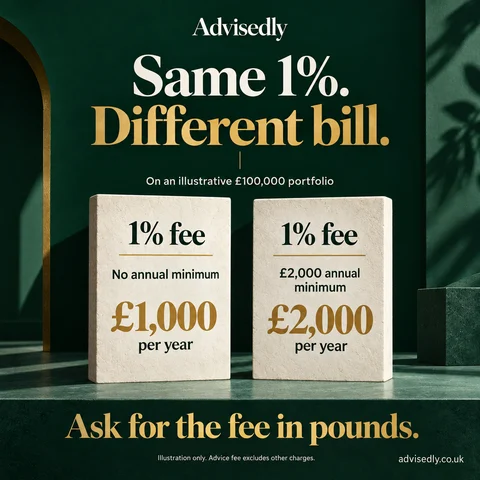
Is a 1% financial adviser fee expensive?
Turn 1% into pounds at different asset levels and compare the service behind the percentage.
Read guide →How much does a financial adviser cost in the UK?
Fixed, hourly and percentage charging explained with current UK context.
Read guide →Can I negotiate financial adviser fees?
What to ask about fixed fees, percentage charges, tiers, caps and competing quotes.
Read guide →How much does a pension adviser cost?
Understand pension adviser fees, including one-off retirement advice, percentage charges and ongoing pension advice.
Read guide →Is a 0.5% financial adviser fee good?
What a 0.5% ongoing financial adviser fee means in pounds and what to compare before deciding whether it offers good value.
Read guide →Is a 0.75% financial adviser fee expensive?
See what 0.75% costs at common portfolio sizes and how to judge whether an ongoing adviser service is worth the fee.
Read guide →Is a 1.5% financial adviser fee too high?
What a 1.5% adviser fee means in pounds and the questions to ask if a quoted ongoing charge sits above common ranges.
Read guide →How do financial advisers get paid?
The main ways UK financial advisers can be paid, including direct fees, product charges and commission for certain products.
Read guide →Do financial advisers get commission?
When UK financial advisers can receive commission and why pension and investment advice is treated differently.
Read guide →How much does a pension drawdown adviser cost?
What to compare when paying for pension drawdown advice, including initial advice, ongoing adviser fees and pension investment costs.
Read guide →What does fee-only financial adviser mean in the UK?
Why fee-only is common US terminology, how UK adviser charging works and what to ask instead.
Read guide →How does a flat-fee financial adviser work?
How fixed financial advice fees work in the UK and what to compare with percentage-based charging.
Read guide →Can you pay a financial adviser by the hour?
How hourly financial adviser fees work in the UK, typical published ranges and questions to ask before agreeing the work.
Read guide →How much does defined benefit pension transfer advice cost?
Why DB transfer advice can cost thousands, when advice is legally required and what to compare between specialist firms.
Read guide →Financial adviser fee tiers explained
How tiered percentage adviser fees work and why the headline rate may not apply to your whole portfolio.
Read guide →Financial adviser minimum fees explained
What a minimum adviser fee means, how it changes the effective percentage cost and why it matters at lower asset levels.
Read guide →Adviser, platform and fund charges: what is the total cost?
How adviser fees, platform charges and investment costs can combine into the total cost of an advised investment service.
Read guide →How much does a retirement adviser cost?
What to compare in retirement-advice fees, including initial planning, ongoing service and other pension or investment charges.
Read guide →Do I need advice?
Do I need a financial adviser?
When regulated advice may add value, when guidance may be enough, and what to consider before paying.
Read guide →How much money do you need for a financial adviser?
Minimum assets, minimum fees and why the adviser's normal client profile matters.
Read guide →Is a financial adviser worth it for £100k?
When financial advice may be worth paying for with around £100,000 of savings, investments or pension assets.
Read guide →Is a financial adviser worth it for £250k?
How to think about the value and cost of financial advice when you have around £250,000 of pension or investment assets.
Read guide →How should you choose a financial adviser for £1m?
What to compare when choosing financial advice for around £1 million of pension or investment assets.
Read guide →Do I have enough money for a financial adviser?
How adviser minimums, minimum fees and one-off advice affect whether financial advice is available at different asset levels.
Read guide →Can you get financial advice for free in the UK?
The difference between free financial guidance and regulated personal advice, including MoneyHelper and Pension Wise.
Read guide →Do high earners need a financial adviser?
When higher income can make financial planning more complex and what to compare when choosing an adviser.
Read guide →When should you get a financial adviser?
Common points when financial advice may become useful, from retirement and inheritance to business sales and more complex investment decisions.
Read guide →When might you not need a financial adviser?
Situations where paid regulated advice may add little and free guidance or self-directed decisions may be enough.
Read guide →What does a financial adviser actually do?
What a UK financial adviser can do beyond choosing investments, from financial planning and pensions to protection and ongoing reviews.
Read guide →Is a financial adviser worth it?
A practical framework for deciding whether the benefit of financial advice is likely to justify the fee.
Read guide →Can a financial adviser save you money?
Where financial advice may reduce avoidable costs or poor decisions, and why an adviser cannot promise that the fee will pay for itself.
Read guide →Is a financial adviser worth it for £50k?
When financial advice may be useful with around £50,000 and why minimum fees can matter more at lower asset levels.
Read guide →Can you manage your investments yourself instead of using an adviser?
When self-directed investing may be realistic and when personalised financial advice can add something different.
Read guide →Retirement & pensions
£500k pension: is an adviser worth it?
How to think about complexity, ongoing advice and fees when a pension is worth around £500,000.
Read guide →Do I need a financial adviser for my pension?
When pension advice may be useful, when guidance may be enough and what to compare before paying for retirement advice.
Read guide →How to choose a pension adviser
How to choose a UK pension or retirement adviser by specialism, client fit, fees and service rather than location alone.
Read guide →Questions to ask a retirement adviser
A practical list of questions to ask a pension or retirement adviser about experience, retirement income, ongoing service and fees.
Read guide →Should you see a financial adviser five years before retirement?
Why the five years before retirement can be a useful time to review pensions, spending, investment risk and retirement income plans.
Read guide →Do you need a financial adviser for pension drawdown?
When regulated advice may help with pension drawdown, including withdrawals, investment risk, provider choice and ongoing retirement planning.
Read guide →Do you need a financial adviser to buy an annuity?
When advice may help with an annuity purchase, including guaranteed rates, health information, provider comparison and retirement income choices.
Read guide →Pension drawdown vs annuity: when can advice help?
Compare pension drawdown and annuities and understand when regulated retirement advice may be useful.
Read guide →Should you consolidate your pensions?
What to check before combining pensions, including fees, investment options and valuable benefits that could be lost.
Read guide →How to choose a pension consolidation adviser
What to compare when looking for regulated advice about combining or transferring pensions.
Read guide →Pension Wise vs a financial adviser: what is the difference?
How free Pension Wise guidance differs from regulated pension and retirement advice in the UK.
Read guide →How to find a financial adviser for a defined benefit pension
What to look for when a defined benefit or final salary pension creates a specialist advice need.
Read guide →Should you transfer a final salary pension?
The major risks of transferring a defined benefit or final salary pension and when specialist regulated advice is required.
Read guide →How to choose a financial adviser for an NHS pension
What NHS Pension Scheme members should look for when financial planning involves public-sector pension benefits.
Read guide →Do you need a financial adviser for a SIPP?
When advice may help with a self-invested personal pension, including provider choice, investments, transfers and retirement planning.
Read guide →How to choose a financial adviser for a SSAS pension
What business owners should compare when considering a small self-administered pension scheme.
Read guide →Do you need a financial adviser for early retirement?
How advice can help test whether early retirement is affordable and coordinate pensions, investments and spending before State Pension age.
Read guide →How can a financial adviser help with phased retirement?
Financial planning for reducing work gradually rather than stopping on one fixed retirement date.
Read guide →What pension size makes financial advice worthwhile?
Why there is no universal minimum pension size for advice and how complexity, fee minimums and retirement decisions affect the answer.
Read guide →Do you need a financial adviser when you retire?
When financial advice at retirement may help with pensions, income, investment risk and coordinating different sources of money.
Read guide →Do you still need a financial adviser after retirement?
How to decide whether ongoing financial advice remains useful after you have already retired.
Read guide →£100k pension: is a financial adviser worth it?
How to think about advice, minimum fees and retirement complexity with a pension worth around £100,000.
Read guide →£250k pension: is a financial adviser worth it?
What to consider when deciding whether to pay for financial advice on a pension worth around £250,000.
Read guide →£1m pension: is a financial adviser worth it?
How to assess financial advice on a £1 million pension, including fee tiers, retirement income planning and ongoing service.
Read guide →Business owners & exits
How to find a financial adviser for a business owner
What business owners should look for in a financial adviser, including founder experience, pensions, protection and personal planning around the company.
Read guide →Financial adviser for a company director: what should you look for?
How company directors can compare financial advisers for pensions, personal investments, protection and planning around their company.
Read guide →When should you speak to a financial adviser before selling a business?
Why founders may want financial planning before a company sale and what to organise before transaction proceeds arrive.
Read guide →Do you need a financial adviser after selling a business?
Financial planning after a business sale, including cash, investment risk, retirement, diversification and adviser fees.
Read guide →What should you do with money after selling a business?
A decision framework for business-sale proceeds, including cash, diversification, future spending, retirement and financial advice.
Read guide →Financial advice for founders with shares or options
What founders should consider when company shares, options or a future exit represent a large part of personal wealth.
Read guide →Inheritance & family wealth
What should you do after receiving an inheritance?
A practical framework for deciding what to do with inherited cash, investments or property before making major financial decisions.
Read guide →How to choose a financial adviser for an inheritance
How to compare financial advisers after an inheritance, including investment experience, family planning, fees and the role of solicitors or tax professionals.
Read guide →Inherited £100k: what should you do?
A practical framework for thinking about a £100,000 inheritance, including cash, debt, investing and whether financial advice may be worth paying for.
Read guide →Inherited £500k: what should you do?
What to consider after inheriting £500,000, including liquidity, investment planning, adviser fees and family decisions.
Read guide →Inherited £1m: what should you do?
A framework for managing a £1 million inheritance, including cash, investment risk, adviser selection, fees and family wealth planning.
Read guide →Financial adviser vs solicitor for inheritance: who does what?
The roles of financial advisers and solicitors after an inheritance, including probate, legal ownership, investments and long-term planning.
Read guide →Do you need a financial adviser for Inheritance Tax planning?
When regulated financial advice may help with Inheritance Tax planning and when legal advice may also be needed.
Read guide →Do you need a financial adviser for a trust?
How financial advisers and solicitors can play different roles when money or investments are held in trust.
Read guide →Adviser types
Independent vs restricted financial adviser
What the labels mean, what they do not mean, and why the answer is only one part of adviser fit.
Read guide →Financial adviser vs wealth manager
Where the services overlap, where they can differ, and what to check instead of relying on the job title.
Read guide →Financial adviser vs financial planner
Why the titles overlap and what to compare instead of relying on the label.
Read guide →Financial adviser vs accountant: who do you need?
The difference between a financial adviser and accountant, where their work overlaps and when business owners may need both.
Read guide →IFA vs financial adviser: what is the difference?
What IFA means in the UK and how an independent financial adviser differs from a restricted adviser.
Read guide →Financial advisor vs financial adviser: is there a difference in the UK?
Whether financial advisor and financial adviser mean different things in the UK and which spelling regulators use.
Read guide →Financial adviser vs mortgage broker: who do you need?
The difference between broader financial planning and regulated mortgage advice when buying or remortgaging a home.
Read guide →Financial coach vs financial adviser: what is the difference?
How financial coaching differs from regulated financial advice and why the distinction matters before paying for help.
Read guide →Robo-adviser vs financial adviser: which is right for you?
How automated investment services differ from personalised regulated financial advice in the UK.
Read guide →Financial planner vs investment manager: what is the difference?
The difference between planning your wider finances and managing an investment portfolio.
Read guide →What is an independent financial adviser?
What independent financial adviser means in the UK and what to ask before choosing one.
Read guide →What is a restricted financial adviser?
What restricted financial adviser means in the UK and the questions to ask about the restriction.
Read guide →Financial advice vs guidance: what is the difference?
The difference between regulated financial advice and general financial guidance, and when each may be useful.
Read guide →Qualifications
What does Chartered Financial Planner mean?
What Chartered status signals and why it is still only one part of adviser fit.
Read guide →What qualifications should a financial adviser have in the UK?
Understand UK financial adviser qualification levels, the Diploma in Regulated Financial Planning and why extra designations still need context.
Read guide →What is a Statement of Professional Standing for a financial adviser?
What an SPS is, what it confirms and why consumers can ask a UK financial adviser to show it.
Read guide →What does DipPFS mean after a financial adviser's name?
What the DipPFS designation means and how it relates to the CII Diploma in Regulated Financial Planning.
Read guide →What does APFS mean after a financial adviser's name?
What the APFS designation means and how the Advanced Diploma in Financial Planning relates to Chartered Financial Planner status.
Read guide →Level 4 vs Level 6 financial adviser qualifications
What Level 4 and Level 6 financial planning qualifications can indicate, and why consumers should not treat the level as a league table.
Read guide →The advice process
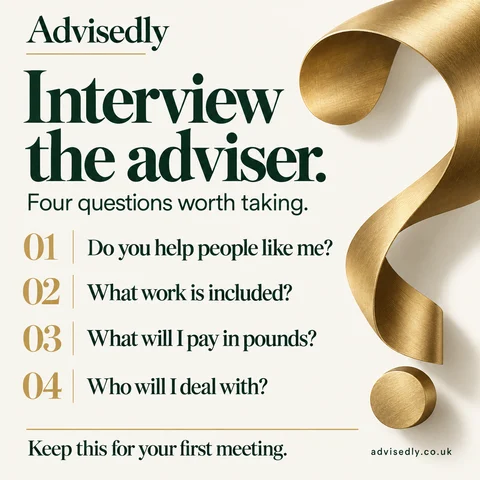
Questions to ask a financial adviser
A practical checklist covering regulation, specialism, minimums, fees and ongoing service.
Read guide →One-off vs ongoing financial advice
When a defined piece of advice may be enough and when ongoing reviews may add value.
Read guide →What happens at a first financial adviser meeting?
What to expect from a first UK financial adviser meeting, including questions, fees, fact-finding and what you should know before agreeing to proceed.
Read guide →What documents do I need for a financial adviser meeting?
A practical checklist of documents and information that can make a financial adviser meeting more useful.
Read guide →What does a free financial adviser consultation mean?
Understand what a free initial financial adviser consultation usually covers and how it differs from free regulated investment or pension advice.
Read guide →What does ongoing financial advice include?
What ongoing financial advice can include, what to ask your adviser and how to decide whether the annual fee is worth paying.
Read guide →Can I stop paying ongoing financial adviser fees?
What to check if you no longer want ongoing financial advice, including service terms, investments and what happens after advice ends.
Read guide →What is a financial adviser fact-find?
What a financial adviser fact-find is, why advisers ask detailed questions and what information is normally relevant.
Read guide →What is a financial adviser suitability report?
What a suitability report is intended to explain and what to check before acting on a financial adviser's recommendation.
Read guide →How long does financial advice take?
How long the financial advice process can take and what affects the timeline from first meeting to recommendation and implementation.
Read guide →What is cashflow modelling in financial advice?
How financial advisers use cashflow modelling to connect assets, income, spending and future goals.
Read guide →How often should you meet your financial adviser?
How to judge whether annual, more frequent or ad-hoc financial-adviser reviews make sense for your situation.
Read guide →Should you switch financial adviser?
When changing financial adviser may be worth considering and what to check before moving an ongoing advice relationship.
Read guide →Life events
When might you need a financial adviser after divorce?
Financial planning after divorce, including pensions, investments, cashflow and how to choose an adviser for the new position.
Read guide →Do you need a financial adviser after redundancy?
When financial advice may help after redundancy, including severance payments, pensions, cash reserves and retirement decisions.
Read guide →When might a financial adviser help after bereavement?
When financial advice can help after bereavement, including inherited assets, pensions, investments and avoiding rushed decisions.
Read guide →Can a financial adviser help plan for school fees?
How financial planning can help families think about private school fees, cashflow, investments and trade-offs with retirement goals.
Read guide →Do you need a financial adviser for a large cash lump sum?
How to think about financial advice after receiving a large amount of cash from a sale, bonus, compensation, inheritance or other event.
Read guide →Do you need a financial adviser after selling a property?
What to consider when a property sale leaves you with a large cash balance and you are deciding what to do next.
Read guide →Professionals
How to choose a financial adviser for doctors
What doctors should compare when looking for financial advice, including pensions, private income, protection and adviser experience.
Read guide →How to choose a financial adviser for dentists
What dentists should compare when looking for advice on pensions, practice ownership, investments and protection.
Read guide →How to choose a financial adviser for lawyers
Financial-adviser considerations for solicitors, barristers and law-firm partners with higher income or partnership interests.
Read guide →Work & self-employed
Do self-employed people need a financial adviser?
When financial advice may help self-employed people with pensions, irregular income, investments, protection and retirement planning.
Read guide →When might a contractor need a financial adviser?
Financial planning considerations for contractors, including pensions, variable income, protection and moving between employment structures.
Read guide →More financial advice
How to change financial adviser
A practical checklist for changing financial adviser in the UK, including fees, records, investments and checking the new adviser.
Read guide →Do you need an adviser for income protection?
When an independent financial adviser or specialist broker may help with income protection insurance and how they can be paid.
Read guide →How to choose a business protection adviser
What business owners should compare when looking for advice on key person, shareholder and other business protection needs.
Read guide →Can a financial adviser help with tax planning?
Where financial advice can overlap with tax planning and when an accountant or specialist tax adviser may also be needed.
Read guide →