
Large cash inheritance
Moving from a large cash balance toward a plan without feeling pressured into acting immediately.
Whether you have received an inheritance or are planning what to leave your family, a financial adviser can help you consider cash, investments, pensions and your longer-term needs.

The right service depends on what the inheritance changes in the rest of your financial life.
Moving from a large cash balance toward a plan without feeling pressured into acting immediately.
Understanding whether existing investments fit your own goals, risk tolerance and tax position.
Coordinating property, cash, pensions and investments rather than treating each decision separately.
Planning what to leave your family while keeping enough for your own needs. Our inheritance tax advice guide explains when a financial adviser, solicitor or tax specialist can help.
Regular experience can matter when the client has never managed this level of wealth before.
Cash, investments and property can create different planning questions.
Ask for actual pounds and the service included.
Some situations may also involve solicitors, accountants or tax specialists.
Receiving an inheritance and planning what you will leave are different starting points. Identify the money or assets you can use, the questions still with the estate and the decisions that need personal advice.
| Your question | Where to start | What to establish |
|---|---|---|
| When will the inheritance be available? | The executor or solicitor dealing with the estate. | What you will receive, ownership, timing and any outstanding estate matters. |
| How does it change my finances? | A financial adviser for personal pensions, investments and longer-term planning. | Near-term needs, debts, income, risk and the work required before any recommendation. |
| What does the quoted fee cover? | Each professional providing part of the work. | Whether the fee covers your personal plan only, and which legal, tax, property or trust matters are charged separately. |
| Can I give money away or change a will? | A solicitor or tax specialist, with financial-planning input where needed. | Legal and tax consequences alongside whether your own future needs remain affordable. |
For a first conversation, list cash, property and investments separately, mark estimated values and uncertain dates, and explain any decisions with deadlines. Include what you feel ready to discuss and what you would prefer to leave until later. You do not need to choose an investment or provide estate documents in the Advisedly enquiry form.
Explain whether you are expecting an inheritance, have received it or want to plan what you leave to others. The adviser can discuss the help they offer and where a solicitor or tax specialist may also be needed.
An approximate amount, the types of assets involved and your main questions are enough for an Advisedly enquiry. You do not need to decide how to invest before speaking to someone.
Check whether the meeting is free and agree the scope and fee before paid work begins. Take the free meeting pack with you, then compare written quotes once you have them.
Advisedly’s enquiry service is free. We review your answers and aim to acknowledge your enquiry within one working day, with an update on the next step within two. You choose whether to take advice.
Who helps with inheritance tax planning, gifts, an estate or money you have inherited? Compare professional roles and prepare the right questions.
Read guide →Understand what you have inherited, separate estate and personal tax questions, and prepare a financial plan before investing or gifting money.
Read guide →The roles of financial advisers and solicitors after an inheritance, including probate, legal ownership, investments and long-term planning.
Read guide →Owning a home with another person does not, by itself, tell you how the financial interest will pass on death. In England and Wales, the distinction between beneficial joint…
Read guide →In many households, one person knows where the accounts are, when bills fall due and which adviser to call. If that person becomes unavailable, the difficulty can be finding…
Read guide →Regular family support may qualify for the Inheritance Tax exemption for normal expenditure out of income. The important question is not simply whether a gift was affordable or…
Read guide →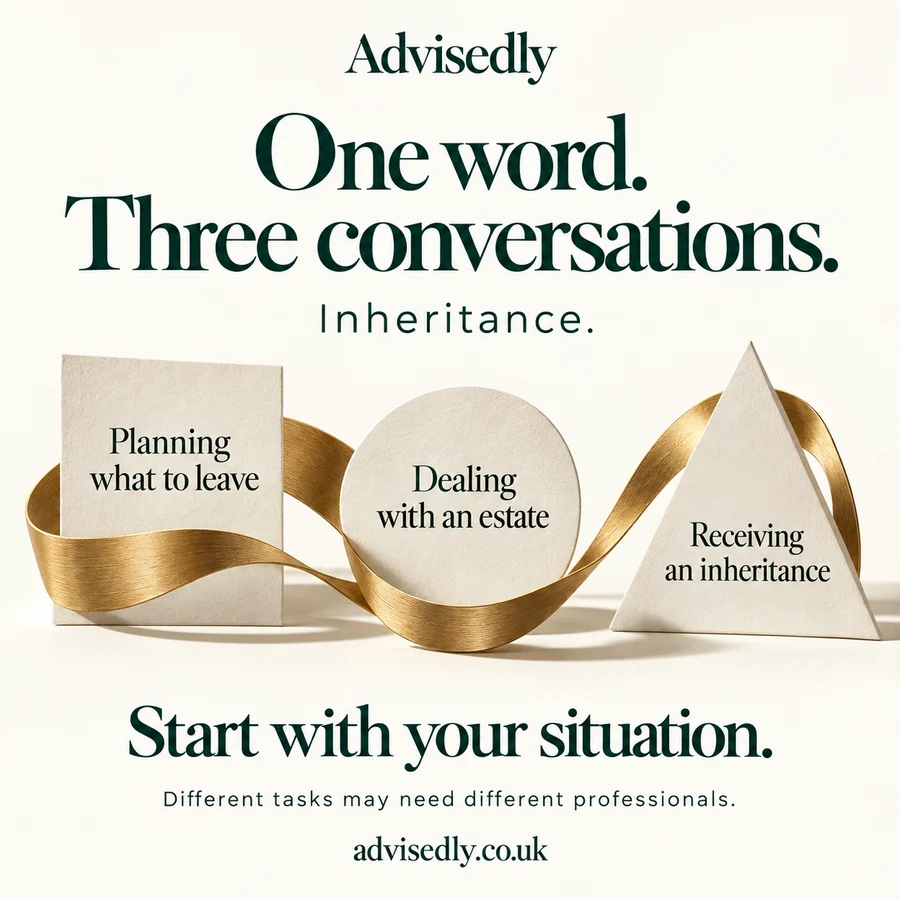
Planning what to leave, dealing with an estate and deciding what to do with money received can need different help. Ask which work belongs with a solicitor, tax specialist or financial adviser.
Prepare your questions