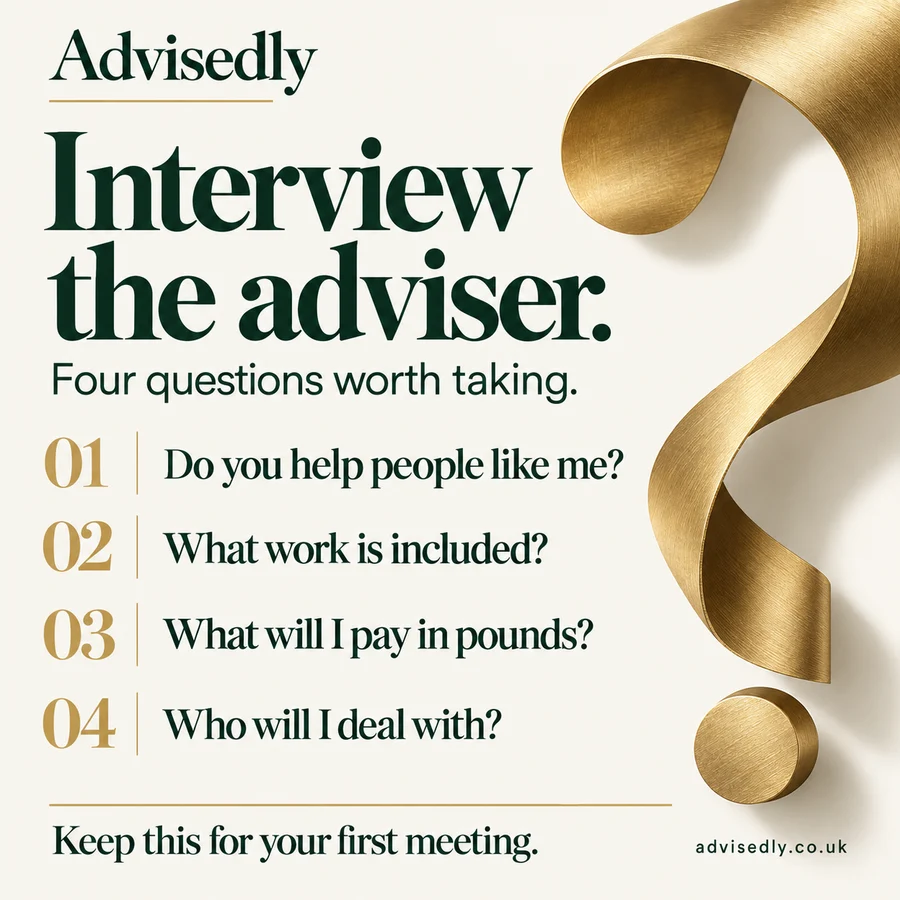
Questions to ask a financial adviser
Use the first meeting to establish who is responsible for the advice, whether the firm handles your situation, what you will receive and what it costs. Ask for enough written detail to compare proposals afterwards, without deciding on the spot.
Choose an adviser for your needs →
Five answers to bring home
| Ask | Write down | Follow up if unclear |
|---|---|---|
| Who provides my advice? | Firm, adviser and contact details | Which firm carries responsibility? |
| What exactly will you do? | Scope and written output | What is outside the agreed work? |
| What will it cost? | Initial and annual amounts in pounds | Are implementation and investment charges extra? |
| What happens after the plan? | Handover or ongoing service | Who monitors it and when? |
| When do I commit? | Agreement and next step | What work creates a charge? |
You can copy these questions into your own notes. Leave space for each firm's answers so you compare the same points.
Regulation and services
Who they help and their experience
Fees
Ongoing service
Follow up broad answers with a practical example
If a firm says it provides comprehensive planning, ask what it would deliver for the decision you have described. If it promises regular reviews, ask what a completed review contains and who initiates it. If it says fees are competitive, ask for the total in pounds and the exclusions.
Try a relevant change in circumstances: an unexpected pension withdrawal, a delayed business sale or a new family commitment. Ask how the service would respond, what information it would need and whether extra charges would apply. This is a test of scope, not a request for a recommendation before the fact-find.
Write down anything that needs confirmation. Useful questions have an answer you can compare with the engagement terms later. You do not need to challenge every detail in one meeting, but identity, responsibility, costs and the next stage should be clear before you commit.
If you are bringing a partner or another trusted person, agree the main questions beforehand. Make space for each person to understand the answer. A decision made jointly should not depend on one attendee silently accepting terminology they do not understand.
Sources and further reading
MoneyHelper: Choosing a financial adviser ↗