
Chip and PIN: the checkout ritual that changed Britain's card payments
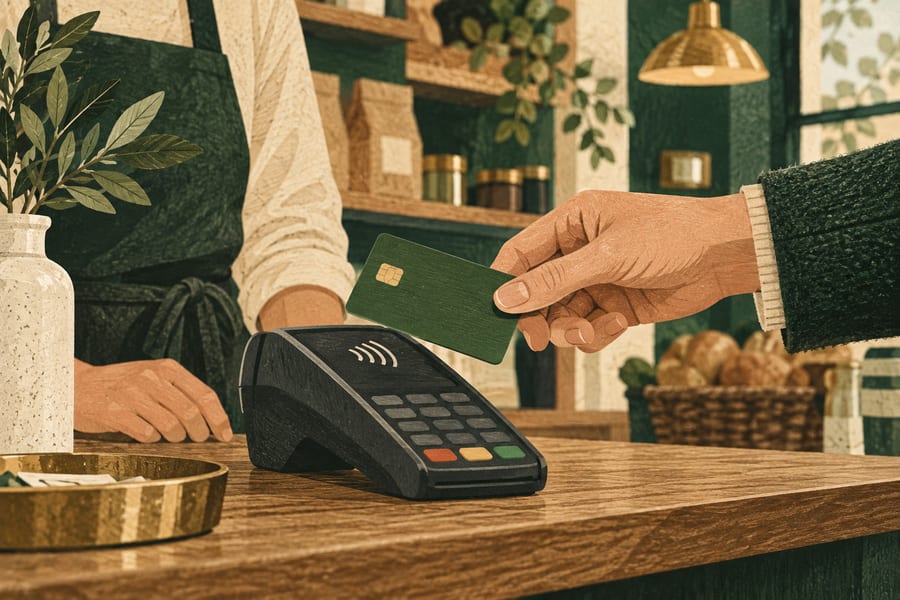
Illustration inspired by the subject; not an archival image of the events described.
A card payment once commonly involved a signature. In February 2006, the UK's transition to Chip and PIN reached its defining changeover point. For many shoppers, authorising a purchase now meant entering a number into a terminal rather than signing a slip for comparison.
The visible action was small. The underlying change concerned how a payment system checked the person using a card, and what criminals would try next when a familiar route became harder.
A different kind of check
UK Finance's twentieth-anniversary account describes reducing fraud involving physical cards and counterfeit magnetic-stripe cards as a central reason for the change. The card's chip and the customer's PIN altered the process used at the point of sale.
The contrast with a signature helps explain the nature of the shift. A signature invites a visual comparison. A PIN introduces a different piece of information into an electronic authentication process. Neither description should be turned into a claim that one simple action eliminates all possible fraud.
The anniversary is a useful date in payment history, but it is not evidence that every cardholder's circumstances or every payment channel became identical overnight. Large systems have exceptions, transitions and different routes for different users.
The shop counter was only one setting
Card payments also take place when the buyer is not standing in front of a retailer. A change designed for the physical checkout does not automatically resolve the risks of remote purchases or the way a customer may be manipulated into authorising a transaction.
That distinction matters when interpreting a successful security reform. Reducing one form of fraud is a meaningful achievement. It does not justify describing the whole payment environment as secure against every method of attack.
UK Finance's later account explicitly contrasts changes in counterfeit-card fraud with the growth of remote-purchase fraud and techniques designed to obtain security information from customers. Its figures describe particular periods and categories, rather than an unchanging risk level.
Familiarity became part of the process
Once a routine is repeated enough, it stops feeling like an innovation. Inserting a card, waiting for the terminal and entering a PIN became a recognisable sequence. That familiarity helps a payment system work, but it can also make the technology behind the sequence less visible.
An important question remains: what exactly is being confirmed? Possession of a card, knowledge of a number and approval of a transaction are related concepts, but they are not interchangeable in every payment system.
The history is useful because it shows authentication as a designed process rather than a timeless feature of money. The process can be changed when technology, behaviour and threats change.
Another transition was already close
UK Finance dates the introduction of UK contactless payments to 2007, initially with a £10 limit. That development followed a different emphasis: making suitable everyday payments quicker by changing the interaction again.
The short gap between the two milestones complicates a simple story of one technology replacing another once and for all. Payment methods can coexist. The method appropriate for one transaction may differ from the method used for another, and the underlying checks can change according to the circumstances.
The public experience is often a succession of small actions: sign, enter a number, tap a card, use a phone. The financial system behind those actions is more complicated than the gesture suggests.
Security was a continuing task
Chip and PIN's place in the history of money rests on the redesign of a familiar transaction at enormous everyday scale. It changed what customers and retailers did together at the checkout.
Its broader lesson is about the limits of finality. A security improvement can make a specific attack harder while the surrounding environment continues to evolve. That is a reason to understand the protection being discussed, rather than dismissing improvements because they are incomplete or treating them as guarantees.
This historical feature does not replace current guidance from a card provider about protecting payment details or reporting suspected fraud. It explains why a familiar modern routine emerged, and why the routine has continued to change.
Related Guides explain checking regulated firms, financial warning signs and financial advice versus guidance.
Sources and context
This historical feature draws on published records. It is not a first-hand account or an interview. Historical rules and protections should not be assumed to apply today.
Sources checked 18 September 2026. Our editorial standards.