
Overend Gurney: the famous firm the Bank of England would not rescue
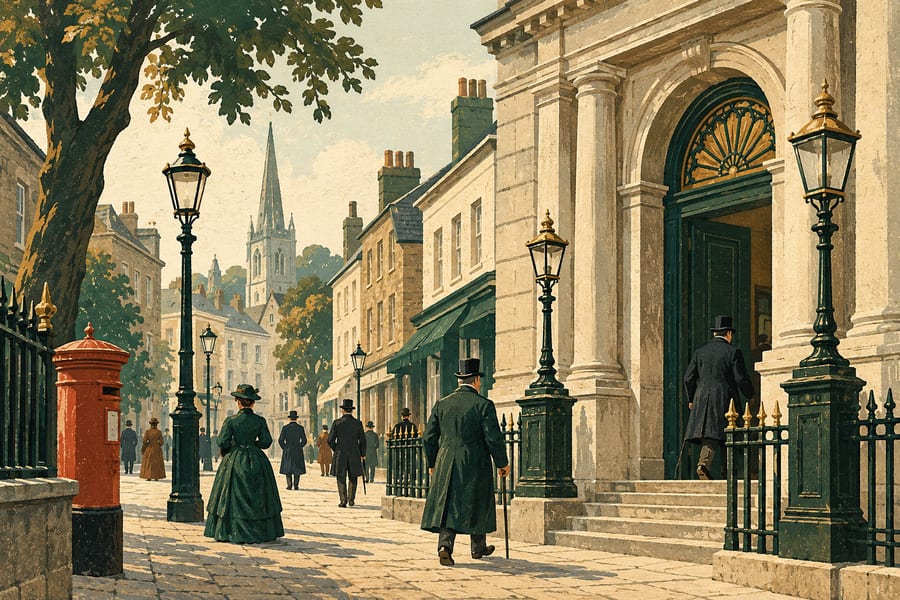
Illustration inspired by the subject; not an archival image of the events described.
In May 1866, Overend Gurney, a major London discount house, failed. The Bank of England refused assistance to the firm while supporting other viable banks and brokers through the panic that followed.
The contrast is the heart of the story. A response to a financial crisis can involve lending to the wider system without saving the institution at its centre. The choice raises difficult questions about solvency, liquidity and the consequences of a rescue.
A respected position did not settle the balance sheet
The Bank's study marking the crisis's 150th anniversary identifies Overend Gurney as the largest discount house in the City. Its failure created a shock beyond the firm itself.
Prominence is relevant to the consequences of failure, but it is not a substitute for financial soundness. An institution can occupy an important market position while its own assets and obligations deteriorate.
That distinction is especially visible in a crisis involving a familiar name. Confidence built through past dealings may persist longer than the conditions that originally supported it. Historical reputation and the current financial position can move apart.
The Bank drew a line
The full Bank study examines the lending decisions and the pressure on the Bank's own reserves. It describes a refusal to support Overend Gurney alongside assistance for viable institutions needing refinancing.
The distinction between a temporary need for cash and a deeper inability to meet obligations was central to the decision. Emergency lending can address a timing problem. It cannot automatically make losses or inadequate assets disappear.
Drawing that line in practice is harder than stating it in retrospect. A lender needs information about the applicant and must act while market conditions and confidence are changing. The judgement carries consequences for both the individual firm and the wider system.
Supporting others still carried a cost
The Bank's retrospective notes that providing support to viable institutions depleted its reserves. Refusing one rescue therefore did not mean standing aside from the crisis altogether.
This is an important corrective to a simple choice between intervention and no intervention. The actual response can differ by institution, collateral and purpose. A central bank may try to keep essential financing available while allowing a particular business to fail.
The policy question then becomes how to sustain the system without promising that every prominent participant will be protected from its own losses.
A private bank performing a wider role
The Bank of England was itself privately owned at the time. Its position in the 1866 crisis should therefore be read in the institutional setting of that period, rather than assuming the modern central-bank framework was already complete.
The study connects the episode to debates about lender-of-last-resort policy and limited liability. The crisis helped shape ideas about what support should be available and under what conditions.
That development is one reason historical failures matter beyond their immediate casualties. They can change the expectations surrounding institutions that survive, influencing the rules and practices used in later emergencies.
The boundary that made the episode memorable
Overend Gurney's failure is not merely a cautionary tale about a once-important name. It is an account of a boundary drawn during a crisis: support for the functioning of the financial system did not require support for every firm within it.
The history provides a vocabulary for reading later interventions, but it does not establish that every later case should receive the same response. The assets, liabilities, legal powers and wider consequences can differ.
Its enduring question is precise: when a financial institution asks for emergency help, is the problem a temporary shortage of cash, an underlying shortfall, or a combination of pressures that must be disentangled before a response can work?
Sources and context
This historical feature draws on published records. It is not a first-hand account or an interview. Historical rules and protections should not be assumed to apply today.
Sources checked 18 September 2026. Our editorial standards.